


Tarian
Seni Tarian adalah satu bentuk persembahan melalui pergerakan tubuh badan secara berirama yang dilakukan di tempat dan waktu tertentu untuk keperluan pergaulan, mengungkapkan perasaan, maksud dan pemikiran. Sesuatu persebahan tarian itu diperkuatkan penyampaian dan maksud yang ingin disampaikan melalui bunyi-bunyian atau muzik. Gerakan tarian berbeda dari gerakan rutin seharian seperti berlari, berjalan atau bersenam kerana tarian atau pergerakan yang dianggap tari biasanya bertujuan menyampaikan atau menyuarakan sesuatu pergerakan anggota tubuh badan yang disulami emosi atau jiwa penarinya. Seni tarian di Malaysia dipengaruhi dengan perkembangan semasa dunia seperti ballet, moden kontemporari, jazz, latin dan sebagainya namun seni tarian bersifat tradisional yang mewakili masyarakat komuniti tempatan seharusnya dilindungi , diwarisi dan dimartabatkan agar tidak hilang ditelan arus kemodenan zaman. Suatu ketika dahulu istana menaungi kumpulan-kumpulan sendiri bagi mengadakan persembahan di istana.

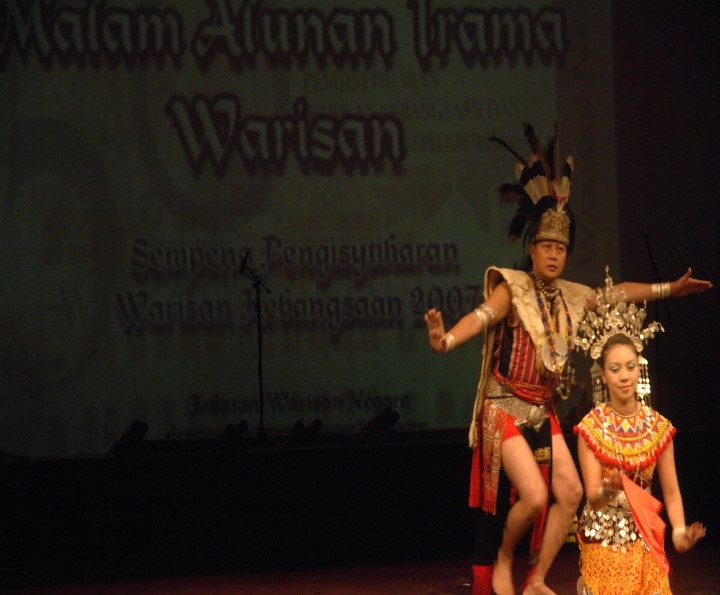
Gambar menunjukkan persembahan Tarian Ngajat
Tarian Ngajat adalah merupakan identiti utama masyarakat Iban yang menjadi kebanggaan kebudayaan di Sarawak. Tarian Ngajat ditarikan dalam sambutan Hari Gawai sebagai tanda kesyukuran dalam hasil menuai padi sepanjang tahun ini. Tarian Ngajat dibahagikan kepada pelbagai jenis tarian iaitu Ngajat Lesong, Ngajat Bunuh, Ngajat Induk, Ngajat Ngalu Temuai (menyambut tetamu), Ngajat Pua Kumbu dan Ngajat Kuta (persembahan ngajat Tradisional). Dahulunya tarian ini biasanya di persembahkan semasa meraikan kejayaan atau menyambut kepulangan pahlawan-pahlawan Iban yang baru balik dari medan perang dan juga meraikan kejayaan hasil dari cucuk tanam mereka yang merujuk kepada tanaman padi.
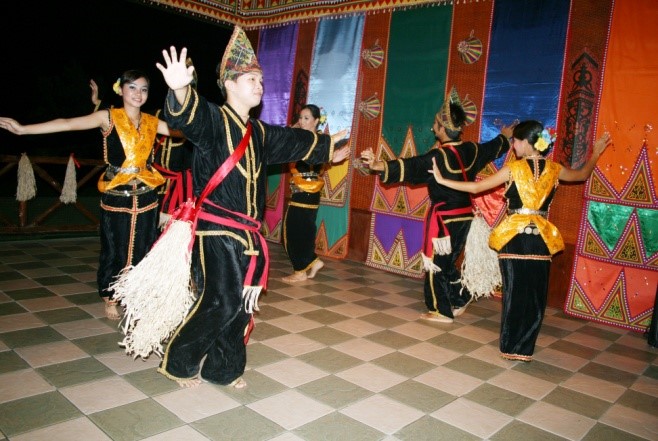

Gambar menunjukkan persembahan Tarian Sumazau
Tarian Sumazau merupakan sejenis tarian tradisi rakyat Sabah yang amat terkenal di Sabah. Ia merupakan tarian tradisi suku kaum Kadazandusun yang sering dipersembahkan pada Tadau Kaamatan iaitu Pesta Menuai yang dirayakan di negeri Sabah pada setiap bulan Mei. Tarian ini ditarikan dengan kedua-dua tangan diangkat ke paras bahu dan dikibar-kibarkan umpama kipasan sayap burung, mengikut alunan rentak yang dimainkan dengan perlahan-lahan dan lemah lembut.


Gambar menunjukkan persembahan Tarian Zapin
Zapin merupakan tarian Melayu yang melambangkan elemen-elemen kesenian Melayu dan Timur Tengah. Bermula dari abad ke-14, imigran Arab yang mendarat di Johor membawa pengaruh kesenian ini ke Semenanjung Malaysia bercirikan selera tempatan yakni dari saduran kesenian Melayu. Tarian Zapin masa kini lebih dikenali sebagai kesenian rakyat yang menggabungkan gerak tari yang berasaskan kaki penari-penarinya. Cara persembahan tarian ini terbahagi kepada tiga peringkat. Peringkat pertama merupakan permulaan tarian atau pembukaan tari. Peringkat kedua ialah pecahan atau gerak serta lenggang tari dan peringkat ketiga merupakan penutup tarian.